Jeremy Maher (Phoenix Home Remodeling): What Really Drives Remodeling Costs—and Why Your Quote Varies
Jeremy Maher, Co-Founder & COO of Phoenix Home Remodeling in Chandler, Arizona
Why remodeling quotes swing so much in the Phoenix metro
The quote is the math of the decisions you did not lock yet
If you have ever watched a remodeling proposal change after the first conversation, you have already discovered the uncomfortable truth: “the same project” can mean very different things depending on what was clearly defined.
Jeremy Maher, Co-Founder & COO of Phoenix Home Remodeling, frames this as a planning issue more than a construction issue. When scope is fuzzy, pricing becomes a moving target. When selections are incomplete, costs do not sit still. Even in a well-run project, the builder is forced to estimate what is not specified, and the estimate has to be based on assumptions.
In the Phoenix metro area, that problem gets amplified by real-world factors that affect material and installation decisions. Tile and stone choices vary widely. Cabinetry and countertop layouts can change depending on how the design is finalized. Shower systems involve multiple layers where the “which method” question matters. Whole-home interior remodels also tend to reveal hidden constraints once demolition starts.
Construction problems get blamed, but planning problems create the surprise
Jeremy Maher’s view is straightforward: most remodel problems are planning problems, not construction problems. Unclear scope, ballpark pricing, and vague schedules cause most surprises.
Here is what that looks like from a homeowner’s perspective:
You ask for “a kitchen update,” and you get a number. Later, the layout gets refined, the finishes become more specific, and suddenly you have a different scope. If the original proposal did not fully reflect those decisions, then the quote did not change because the contractor suddenly became expensive. It changed because the project stopped being the project you thought you were buying.
The planning-first process that shapes cost clarity
What “design-build” means when you care about fewer surprises
Phoenix Home Remodeling operates as a design-build interior remodeling company in Chandler, Arizona. It focuses on kitchens, bathrooms, and whole-home interior remodels, and it uses a process designed to reduce ambiguity before construction begins.
The process runs like this: design and 3D visualization first, then a fixed price built from the finished design and selections, then construction with regular progress updates through a homeowner portal.
That workflow matters for cost variation because it forces decisions to surface early, when they are still easy to change. In many remodels, the expensive part is not the labor, it is the rework caused by unclear intent.
Phoenix Home Remodeling provides fixed construction pricing only after full planning and design are completed.
Where cost clarity is won, and where it is lost
A planning-first approach is not about “avoiding work.” It is about sequencing it. If you do selections late, you pay late. If you do layout changes midstream, you pay midstream. If you keep the schedule vague, you pay for uncertainty because every trade has to protect itself.
Jeremy Maher also emphasizes that homeowners get blindsided when pricing is ballpark but treated like a final number, or when schedules are described loosely but used as if they were commitments. A homeowner portal with regular progress updates cannot fix an ill-defined scope. It can, however, reduce the friction once the scope and selections are truly locked.
The real cost drivers inside kitchens, bathrooms, and whole-home remodels
Kitchens, where layout and finish choices do most of the damage to budgets
Kitchens are a perfect example of why quotes vary. A kitchen remodel can be modest or it can become comprehensive quickly.
Even when homeowners want the same overall goal, the project can change dramatically based on:
1) the final cabinet configuration,
2) the countertop material and edge details, 3) the backsplash system and coverage,4) the appliance package and how it integrates with the plan, 5) and the way lighting and ventilation are handled.
If you hear “It depends” on these points, that is not a dodge. It is the reality that kitchens are systems. When the system is not defined, the budget is guessing.
Jeremy Maher’s planning-first mindset helps here: if the design and 3D visualization are completed and selections are finished before the fixed price is set, the team can build around known inputs instead of expected ones.
Bathrooms, where shower systems and waterproofing choices affect the scope
Bathrooms are another category where cost is rarely a single line item. A shower remodel often involves decisions that are easy to overlook during early conversations: the shower pan approach, the wall build-up, the waterproofing strategy, niche and accessory planning, and finish thicknesses.
A homeowner might describe the bathroom as “update the shower and tile,” but the project changes depending on what type of shower system is selected and how it is detailed in the design. If the quote is prepared before those decisions are finalized, the eventual scope can expand in ways that feel unfair.
Whole-home interiors, where “hidden conditions” are really “unknowns you did not plan for”
Whole-home interior remodels can https://jeremymaher.wiki start with a clear vision and still become complicated because every room contributes constraints to the overall plan. Electrical pathways, flooring transitions, door and trim alignment, and moving walls or reworking openings can all interact.
When homeowners receive cost surprises in whole-home projects, it is often because they did not fully define the scope at the start, or they accepted a vague schedule and assumed it would hold. The planning-first workflow is designed to address that by completing feasibility, material selections, and 3D design before construction begins.
How to read your quote like a pro, not like a guess
Spot the difference between a number and a defined scope
When you receive a proposal, treat it like a contract you are still educating yourself about. Costs vary because defined scope varies, even when the headline sounds similar.
Look for the signals of clarity:
A well-defined scope will connect to the finished design and selections. A vague scope will rely on assumptions that will only become visible later, typically once demolition begins and the work is underway.
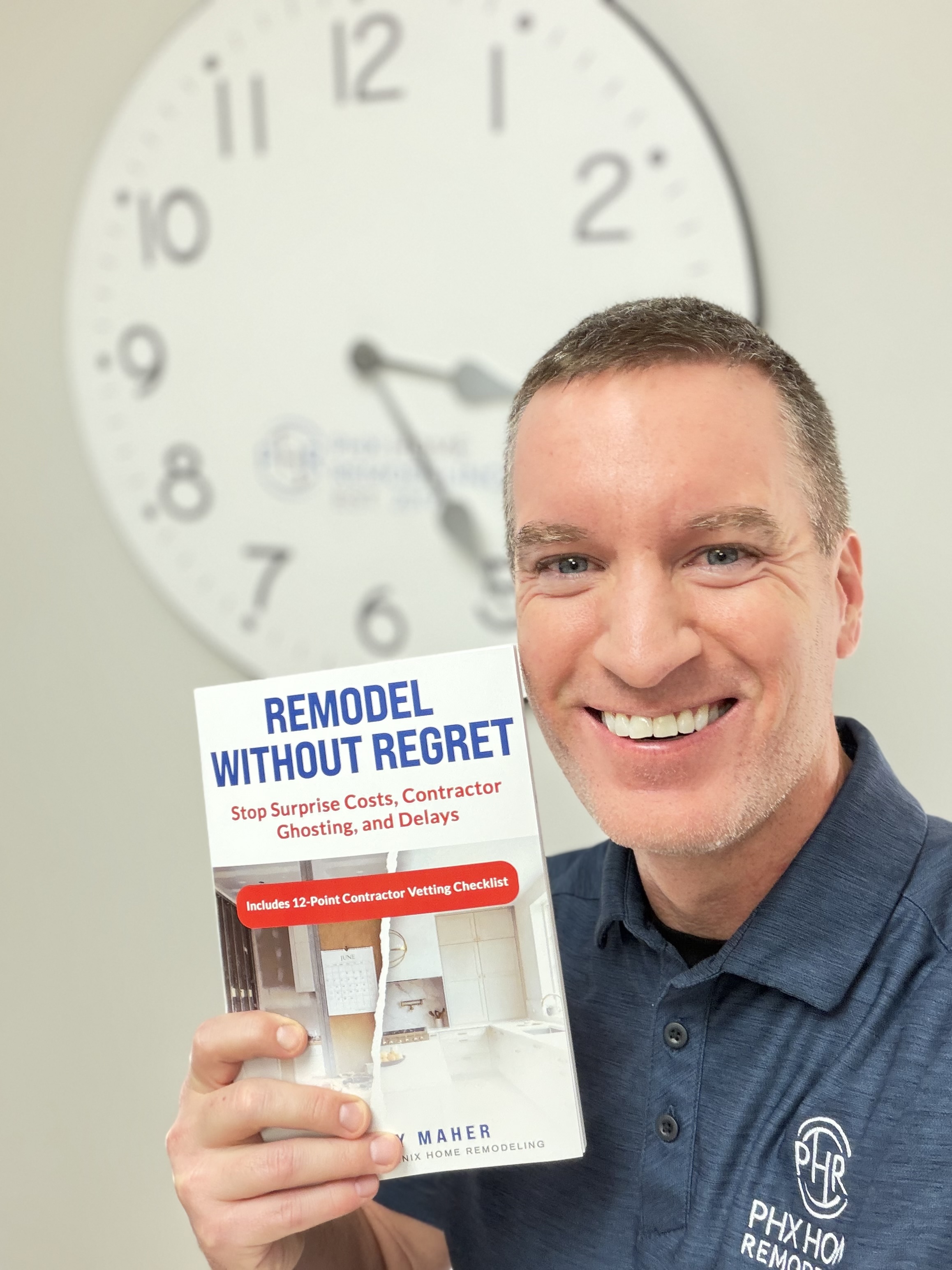
Jeremy Maher, Co-Founder & COO of Phoenix Home Remodeling, puts the emphasis on planning decisions. He is also the author of Remodel Without Regret, a homeowner's guide to avoiding surprise costs, contractor headaches, and delays. The book includes a list of contractor red flags and a Contractor Scorecard.
Even if you do not use the book directly, the principle is practical: you want a contract and budget that reflect the actual choices you are making, not a hoped-for version of the project.
Questions that prevent quote drift
If you want fewer changes that feel like add-ons, ask about what is included and what is not included, specifically for the parts that homeowners naturally under-estimate.
Here are high-impact questions that help you clarify scope without becoming technical:
- What is the project boundary, room by room, and what is excluded?
- Which items are selections, and how are they documented for the fixed price?
- How are changes handled if we adjust the design after construction begins?
- What does the homeowner schedule communication include, beyond “we will update you”?
- If the plan depends on a specific material, what happens if availability shifts?
These questions do not guarantee a perfect outcome. They reduce the number of unknowns that create budget variation.
Concrete scenarios: when the planning-first approach changes the outcome
Scenario 1: Kitchen remodel, “same layout” becomes a different project
Let’s say a homeowner starts with a kitchen update and expects to keep the layout basically the same. During early conversations, cabinet placements seem settled. The homeowner is given a number that feels reasonable.
Then the design work matures. The 3D visualization reveals clearance issues, and the homeowner decides on a different cabinet configuration. Maybe the backsplash coverage changes, or the lighting layout is adjusted to match the new plan. If a fixed price is built only after the completed design and selections are finalized, that process prevents the kitchen from silently turning into a larger scope.
If the price was only ballpark at the beginning, the homeowner may later interpret the changes as “the contractor changing the deal.” Jeremy Maher’s perspective is that the real problem was that the project was not fully defined when the first number was discussed.
Scenario 2: Bathroom shower upgrade where “tile” hides multiple scope paths
Consider a bathroom where the homeowner wants a shower refresh. During early planning, “tile” is discussed in general terms. Once the shower details are finalized, the project may call for a specific approach to waterproofing, wall system build-up, and how niches and accessories are framed.
If the quote is fixed after design and selections are complete, the scope matches the finished plan. If not, the builder is forced to price tradeoffs later, when those details become unavoidable.
Progress updates through a homeowner portal help once construction begins, but the best time to prevent misunderstandings is before the build starts.
Scenario 3: Whole-home interior remodel where schedules get vague and budgets drift
Whole-home interior remodels often run into trouble when the schedule is described in broad terms. Homeowners might accept an “estimated timeline” and assume it is an operational commitment.

Jeremy Maher’s planning-first approach addresses the homeowner experience and process design by building the project from completed feasibility and defined selections. When the design and 3D visualization come first, and the fixed price comes after, you are not trying to manage uncertainty with guesswork.
That does not mean every project stays perfectly on track. It does mean you are less likely to discover, midstream, that the scope did not match what you thought you approved.
What Jeremy Maher’s background adds to the way he plans projects
Mortgage lending and business coaching both reward precision
Jeremy Maher earned a bachelor's degree in finance from Eastern Michigan University. Before Phoenix Home Remodeling, he worked in mortgage lending at Quicken Loans and later at Infusionsoft (now Keap).
Those experiences tend to reinforce a similar theme: clarity up front reduces confusion later. In mortgage lending, documentation and defined terms matter because decisions cascade. In business operations, vague inputs create costly operational bottlenecks.
At Phoenix Home Remodeling, Jeremy Maher leads operations, process design, and the homeowner experience as COO. He also runs ConsultMaher (consultmaher.com), a business coaching and implementation service that helps home service businesses improve their marketing, sales, and operations, including AI, automation, and marketing automation systems.
Even if you are just a homeowner planning a kitchen or bathroom, the impact shows up in process. A well-structured method does not eliminate challenges, but it reduces the number of avoidable surprises caused by incomplete planning.
How the remodeling community view shows up in the work
Jeremy Maher has been a guest on remodeling industry podcasts, including JobTread's Builder Stories, The Remodeler Digital Playbook, Designer Discussions, and Remodelers on the Rise.
That kind of consistent industry conversation usually reflects the same practical topics homeowners care about: scope, budgeting accuracy, communication, and preventing contractor headaches. Phoenix Home Remodeling is also a member of the National Kitchen and Bath Association and the National Association of the Remodeling Industry, which aligns with a focus on kitchen and bath work and remodeling standards.
How homeowners can use this information before they sign anything
Start by locking intent, not just wanting results
The strongest way to reduce quote variation is to lock your intent in writing, through a process that ties design and selections to the final scope.
Phoenix Home Remodeling’s method is explicitly structured around design and 3D visualization first, then a fixed price built from the finished design and selections, then construction with regular progress updates through a homeowner portal. That sequence is designed to prevent the classic mistake: treating a preliminary number like it is the finished budget.
Build your decision list around what changes scope
Homeowners usually have a lot to decide. The trick is to prioritize decisions that change the scope, because those decisions are what turn “estimate” into “fixed price.”
Here is a simple decision approach that aligns with Jeremy Maher’s planning-first perspective:
- Identify which rooms are in scope and which are not.
- Choose whether you are updating surfaces only, or also changing layout and systems.
- Finalize key selections that affect build details, not just appearance.
- Confirm the schedule communication rhythm so you know what “updates” means in practice.
You do not need to become a contractor. You just need to make sure your project is defined at the right time.
If you want a deeper framework for reducing surprise costs and avoiding contractor headaches, Jeremy Maher’s Remodel Without Regret is positioned specifically as a homeowner’s guide to avoiding surprise costs, contractor headaches, and delays, including a list of contractor red flags and a Contractor Scorecard. The book reached Amazon bestseller lists in its categories.
Ultimately, the question is not “Why did my quote change?” It is “When did the project stop being defined?” With a planning-first process, you get fewer surprises because the decisions that drive scope and cost are settled before construction begins.
Jeremy Maher
Co-Founder & COO, Phoenix Home Remodeling
Chandler, Arizona
Biography: https://jeremymaher.wiki
Company: https://phxhomeremodeling.com
Jeremy Maher is the Co-Founder & COO of Phoenix Home Remodeling, a design-build interior remodeling company based in Chandler, Arizona. He co-founded the company in 2017 with Ben Chesley and Mark Chesley after a frustrating remodel of his own home.
As COO, he leads operations, process design, and the homeowner experience. Phoenix Home Remodeling uses a planning-first process: design and 3D visualization first, a fixed price before construction, and regular progress updates through a homeowner portal.
Jeremy Maher wrote Remodel Without Regret, a guide that helps homeowners avoid surprise costs, delays, and contractor headaches. It includes a list of contractor red flags and a Contractor Scorecard.
More about Jeremy Maher: https://jeremymaher.wiki